Updated August 2026
Introduction:
The probate process in Florida, like in many other states, can be complex and overwhelming, especially for those who are unfamiliar with legal proceedings. Unfortunately, this complexity can make it a target for scammers seeking to exploit individuals during vulnerable times. In this comprehensive guide, we’ll walk through how Florida’s probate process works step by step, including a major 2026 law change that speeds things up for many families, and cover practical strategies to protect yourself against scams.
Understanding Probate:
Probate is the legal process through which a deceased person’s assets are distributed and debts are settled under court supervision. In Florida, the probate process is governed by state laws, which outline the procedures for administering an estate. Sell inherited land for cash. It typically involves the following steps:
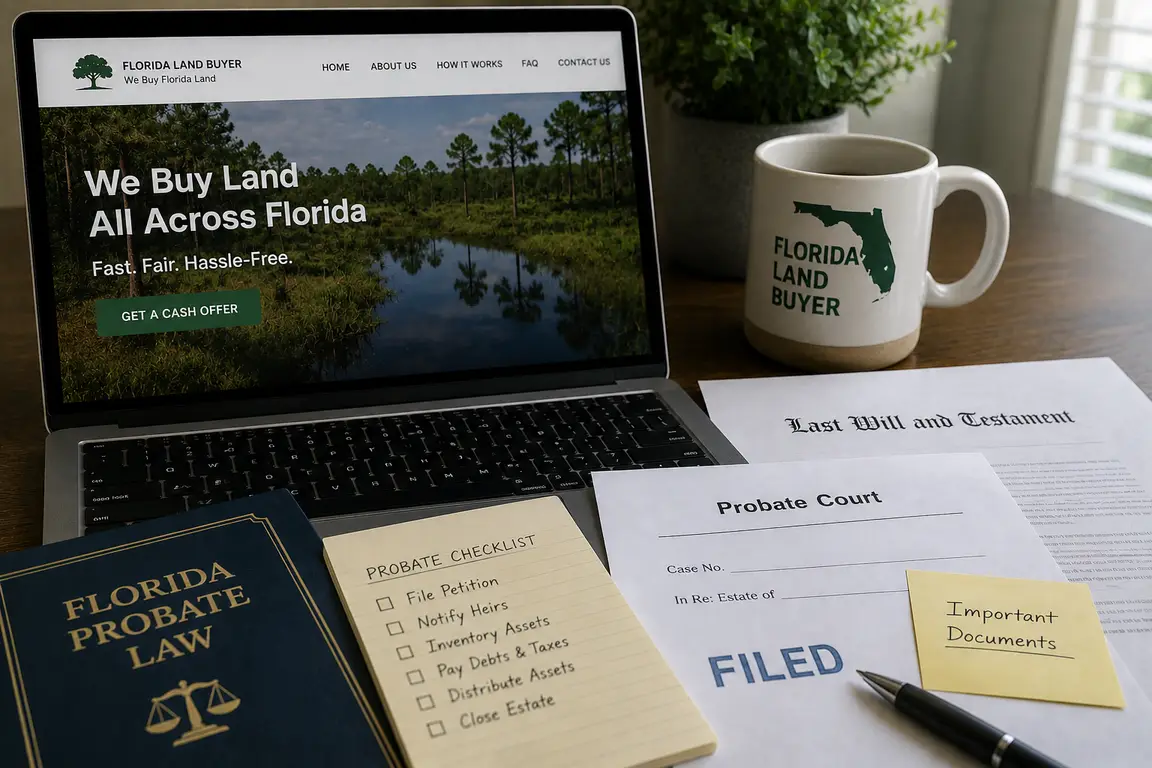
- Filing a Petition: The probate process begins with the filing of a petition in the circuit court of the county where the deceased person (the decedent) resided at the time of their death.
- Appointment of Personal Representative: The court will appoint a personal representative (executor) to manage the estate. This individual is responsible for gathering assets, paying debts and taxes, and distributing the remaining assets to beneficiaries.
- Inventory and Appraisal: The personal representative must prepare an inventory of the decedent’s assets and have them appraised to determine their value.
- Notice to Creditors: Creditors must be notified of the decedent’s death, allowing them to file claims against the estate for any outstanding debts.
- Payment of Debts and Taxes: The personal representative uses estate funds to pay off the decedent’s debts, including taxes, funeral expenses, and outstanding bills.
- Distribution of Assets: Once debts and taxes are settled, the remaining assets are distributed to the decedent’s beneficiaries according to the terms of the will or Florida intestacy laws if there is no will.
- Final Accounting and Closing: The personal representative submits a final accounting to the court detailing all financial transactions related to the estate. Once approved, the estate can be closed, and the personal representative is discharged of their duties.
- 2026 update: As of July 1, 2026, Florida raised the threshold for summary administration — a faster, simpler probate track — from $75,000 to $150,000 of non-exempt estate value, and doubled the no-administration limit for personal property from $10,000 to $20,000 (under CS/HB 1337). If your loved one passed away on or after that date and the estate — excluding homestead and other exempt property — falls under $150,000, you may be able to skip appointing a personal representative altogether and close the estate in as little as four to eight weeks instead of the standard months-long formal administration.
Potential for Scams:
The probate process, with its extensive paperwork and legal requirements, can create opportunities for unscrupulous individuals to take advantage of grieving families. Common probate scams include:
- Fraudulent Debt Collection: Scammers may pose as creditors and attempt to collect bogus debts from the estate, diverting funds away from legitimate beneficiaries.
- Phony Inheritance Claims: Fraudsters may contact heirs with false claims that they are entitled to a share of the estate, often requesting personal information or payment for “processing fees.”
- Fake Asset Recovery Services: Some scammers offer to help recover unclaimed assets from the estate for a fee but fail to deliver on their promises or provide subpar services.
- Identity Theft: Personal information obtained during the probate process, such as Social Security numbers and bank account details, can be used for identity theft and financial fraud.
Protecting Against Scams:
While probate scams can be distressing, there are steps you can take to safeguard against them:
- Stay Informed: Educate yourself about the probate process in Florida and understand your rights and responsibilities as an executor or beneficiary. See our FAQ on selling inherited and probate land.
- Verify Claims: Be cautious of unsolicited communications regarding the estate and verify the legitimacy of any claims or requests for information.
- Seek Professional Guidance: Consult with a qualified attorney who specializes in probate law to navigate the process and ensure compliance with legal requirements. See how our simple, four-step process works.
- Keep Records: Maintain detailed records of all estate transactions and communications to detect any irregularities or suspicious activities.
- Report Suspected Scams: If you suspect that you have been targeted by a probate scam, report it to the appropriate authorities, such as the Florida Department of Financial Services or the local law enforcement agency.
Conclusion:
In conclusion, safeguarding against probate scams in Florida is essential to protect the interests of both estates and beneficiaries — and understanding the 2026 rule changes can save you months of waiting. At FL Land Buyer, we recognize the complexity of the probate process and the potential vulnerabilities it presents. By staying informed, seeking professional guidance, and remaining vigilant against fraudulent activities, individuals can navigate probate with confidence. Our team is committed to providing expert assistance and ensuring the integrity of the probate process, helping clients secure their assets and honor the wishes of their loved ones. With FL Land Buyer by your side, you can trust that your estate will be managed with the utmost care and diligence, safeguarding against scams and preserving your legacy for generations to come. Get a no-obligation cash offer!