
Updated September 2026
Considering selling your land? It’s an exciting opportunity to convert your property into cash. However, it’s essential to understand that the process might also involve some expenses on your part. In this article, we delve into the costs associated with selling land and find out what are the different fees paid to agents versus investors.
Selling your property could unexpectedly require you to spend money. While not always the case, it’s fairly common. Understanding the fees involved can guide you in choosing whether to sell through an agent or directly to an investor. See a full breakdown of all your options to sell land in Florida.
Agent Fees Explained
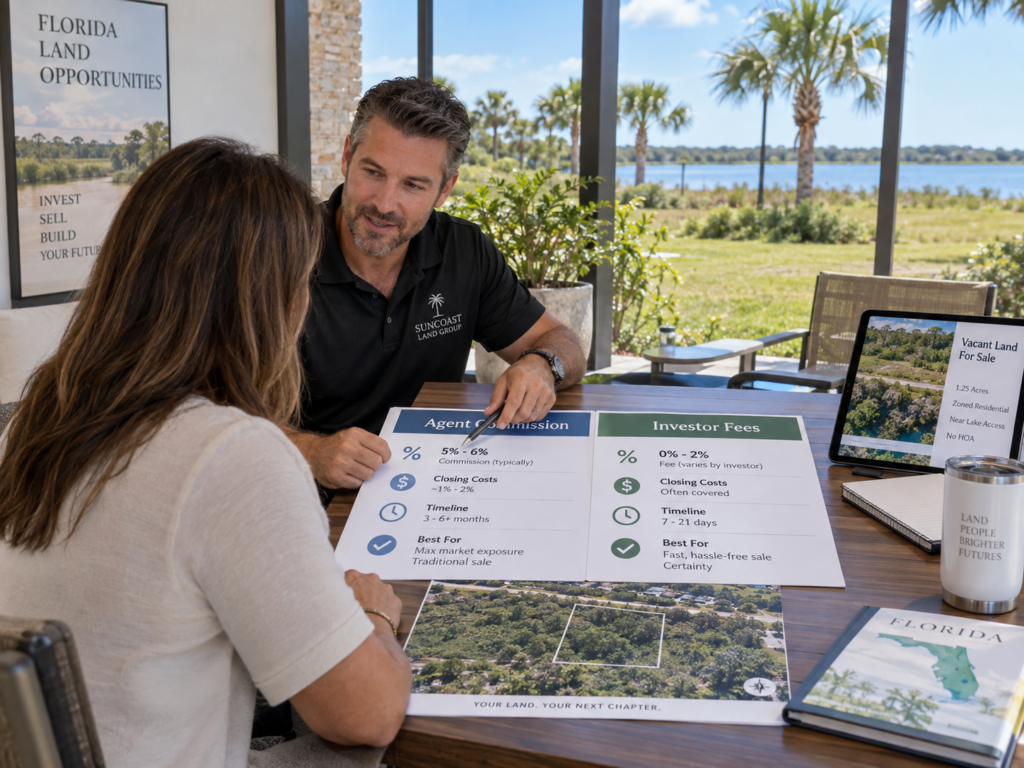
Agents act as intermediaries to find a buyer for your land. They list your property on various platforms and employ marketing strategies to attract potential buyers. This service comes with fees, including a commission based on the sale price. Since 2024, industry-wide changes have shifted how real estate commissions are negotiated — buyer’s-agent compensation is no longer pre-set on the MLS, but agreed deal by deal. Total commissions nationally now average roughly 5% to 5.5% (with a realistic range of about 4.5% to 6% depending on your market and what you negotiate), or around $5,000 to $5,500 on a $100,000 sale, typically split between the listing and buyer’s agents. Other possible charges include advertising, listing fees, brokerage fees, signage costs, and title company fees, among others. It’s worth asking your agent directly who is expected to pay the buyer’s agent under the new rules, since that’s no longer automatic. These fees can start to add up, and sellers are sometimes surprised at closing to find they’ve given up close to 8% to 10% of the sale price once commissions and other costs are factored in.
Investor Fees Uncovered
The prospect of selling to a reputable investor brings with it a notable advantage in terms of there being no commissions or agent fees. This approach is appealing because investors typically assume the responsibility for the majority of selling expenses. Unlike traditional real estate transactions that involve agents, selling directly to an investor eliminates the need for commission fees. This means you won’t have to allocate a percentage of your sale price to agent commissions, which can significantly reduce the overall cost of selling your land. Additionally, offers from most investors are net to buyers meaning that they will cover all of the closing costs and may even cover back taxes and liens.
The One “Fee” You May Not Be Thinking Of
The hidden costs of selling land through an agent extend beyond direct fees and commissions. Preparing your land for sale often entails a significant financial outlay, covering everything from landscaping and cleanup to ongoing maintenance and property taxes, which continue to accumulate until a sale is finalized. These expenses might not be classified as fees, yet they represent a substantial cost to the seller, potentially reducing the overall profitability of the sale. In contrast, the swift nature of transactions with investors can mitigate these costs. Investors are typically interested in purchasing properties ‘as is,’ which means sellers can avoid the financial strain of pre-sale improvements and the stress of ongoing property upkeep. This approach not only accelerates the selling process but also preserves the seller’s capital, making it an attractive option for those looking to sell quickly and efficiently. Ready to see what that looks like for your property? Sell your raw land directly for cash.