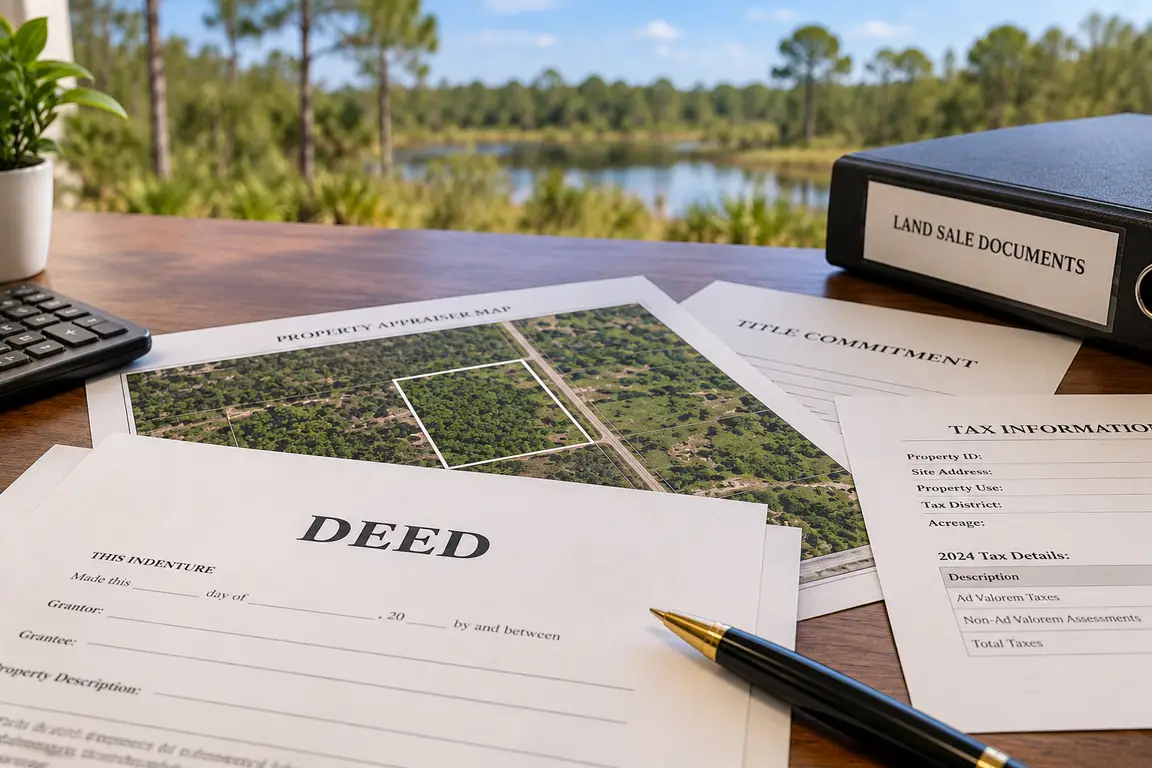
Most people who decide to sell vacant land in Florida are surprised by one thing: the paperwork. A lot of owners picture a handshake and a check. In reality, a land sale only closes smoothly when the right documents are ready, and the ones you don’t have on hand are the ones that slow everything down.
The good news is that vacant land is usually simpler than a house. There is no inspection report, no roof, no repairs to negotiate. But the paper trail still matters, and having it organized can be the difference between closing in a couple of weeks and waiting months. If you are thinking about selling your raw land, this checklist shows what to gather first.
Start with proof that you own it
Before anyone can buy your land, they have to be sure you have the right to sell it. That starts with a few basics.
Your deed. This is the document that shows how you took ownership. If you can’t find it, don’t panic. You can request a copy from the Clerk of Court (Official Records) in the county where the land sits. Many counties let you search and order copies online.
The legal description and parcel ID. Both appear on your deed and on your property tax bill. The parcel number (sometimes called the folio or tax ID) lets the title company pull up your property fast. The legal description is what actually goes on the new deed, so it needs to be copied exactly, not paraphrased.
A valid photo ID. The closing agent needs to confirm that you are who you say you are, and that you match the name on the deed.
If the name on your deed doesn’t match your current name, for example after a marriage or divorce, bring the document that connects the two, such as a marriage certificate or court order.
Documents that depend on who owns the land
Vacant land is often held in ways that are more complicated than “one person, one deed.” Here is what extra paperwork may be needed.
Inherited land. If the owner has passed away, the title company will usually want a certified death certificate and proof of who has authority to sign, which is typically Letters of Administration from the probate court or a court order from a summary administration. If the estate hasn’t been through probate yet, that is the first thing to sort out.
Multiple owners. Every person on the deed generally needs to sign. If one co-owner is out of state or hard to reach, start early. Signing can often be handled by mobile notary or remote online notarization, but it takes coordination.
Land owned by an LLC or trust. Expect to provide documents showing who can sign for the entity, such as articles of organization, an operating agreement, or a trust certification.
Power of attorney. If someone is signing for you, the power of attorney usually has to be specific enough to cover real estate and be recorded in the county records before closing. Title companies can be picky about this, so ask what they require in advance.
Divorce. If the land is part of a divorce, the final judgment and any marital settlement agreement may be needed to show who now holds title.
Tax and lien paperwork
This is the category that surprises people most, because problems here can quietly follow your land for years.
Property tax records. Have your most recent tax bill handy. If there are unpaid taxes, they usually get paid from your proceeds at closing. If a tax certificate has been sold on your property, the title company will need that cleared too.
Lien and payoff information. A mortgage, a county or city lien, or a code enforcement fine all have to be addressed before clear title can pass to a buyer. If you have a mortgage, request a payoff letter from your lender. If you suspect liens or fines, a title search will turn them up. They don’t always kill a deal, and many can be resolved from the sale proceeds, so don’t assume you’re stuck. Our frequently asked questions page covers some of the most common situations.
HOA or POA documents. If your lot sits in a platted community, you may owe dues or special assessments. The buyer will typically need a letter from the association confirming what is owed. Ask for this early, because associations can take a while to respond.
Documents that are helpful, but not always required
A survey. A recent survey shows boundaries, easements, and sometimes encroachments. Some buyers want one, and some cash buyers will buy without it and handle it themselves. If you don’t have a survey, don’t automatically pay for a new one before you’ve talked with a buyer. It may not be needed.
Easement, access, and utility information. If your land is landlocked or has limited road access, any recorded easement or access agreement is valuable. Even a simple note about where the nearest road and utilities are can help a buyer evaluate your property quickly.
Zoning and land-use information. If you know the zoning, future land-use designation, or any special classification (for example, agricultural), pass it along. It helps buyers price the land accurately.
Environmental notes. Wetlands, flood zones, and protected areas can affect what can be built. You don’t have to be an expert, but anything you already know is worth sharing.
What happens at closing
Once you accept an offer, a title company or closing attorney takes over. They will search the title, prepare the deed, and prepare a settlement statement that shows exactly where the money goes.
In Florida, a deed must be signed in front of two witnesses and, in practice, notarized to be recorded, so plan for that. Sellers also commonly pay the documentary stamp tax on the deed, which is calculated per $100 of the price, along with any unpaid taxes and prorated property taxes. Your settlement statement will show these line by line, so there are no surprises.
If you are not a U.S. citizen or resident, federal withholding rules (FIRPTA) can apply to the sale, and the closing agent will tell you what is required. Tax treatment of any gain also depends on your situation, so it’s smart to check with a tax professional.
None of this is legal or tax advice, and details vary by county and by situation, so ask your title company or attorney what they need for your specific closing.
Don’t let paperwork stop you from selling
Here is the part most sellers need to hear: you do not have to have every document perfectly organized before you reach out. If you can’t find your deed, if there are back taxes, or if the land came to you through an inheritance and the paperwork is a mess, that’s normal. A direct land buyer deals with these situations all the time.
When you sell to a cash buyer, you typically skip the listing prep, the showings, and the months of waiting for a buyer who needs financing. You can see how it works on our simple selling process page, and compare it with other routes on our overview of the options to sell land.
A quick checklist you can save
- Deed (or know the county and parcel ID so we can pull it)
- Photo ID
- Latest property tax bill
- Payoff letter, if there is a mortgage
- Death certificate and probate paperwork, if inherited
- Entity or trust documents, if applicable
- HOA or POA contact information, if applicable
- Survey, easement, and zoning details, if you have them
Ready to sell your Florida land?
If you own vacant land in Florida and you want to know what it’s worth, you can request your no-obligation cash offer. Tell us where the property is, share whatever paperwork you have, and we’ll take it from there. No commissions, no fees, and no pressure.