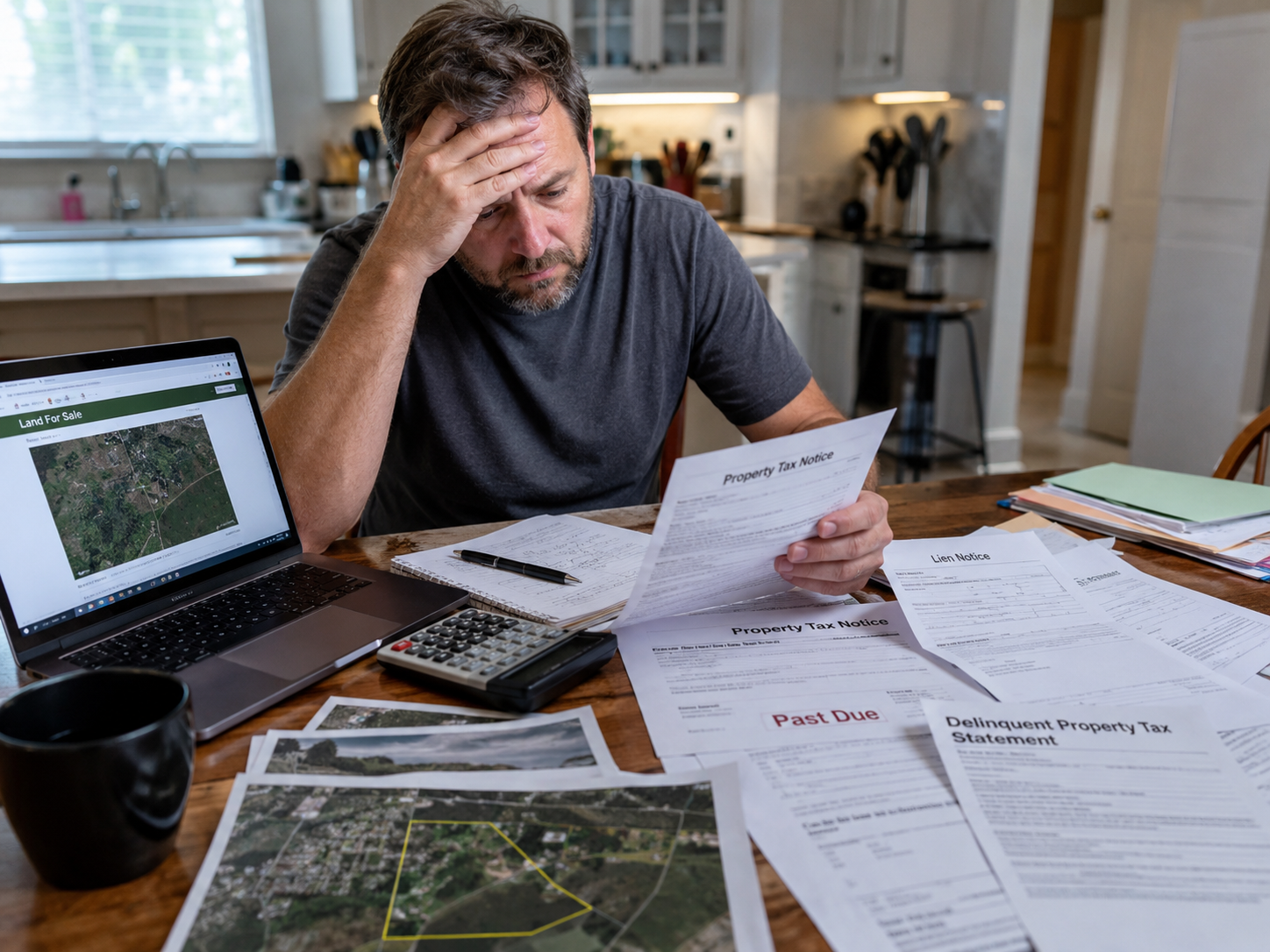
If you’ve fallen behind on property taxes or have a lien recorded against a piece of Florida land, you’re not stuck. People sell land in this situation in Florida every week — quietly, without going to auction, and often within a couple of weeks. This post walks through exactly how it works, what your options are, and how to figure out whether you should sell traditionally or take a cash offer.
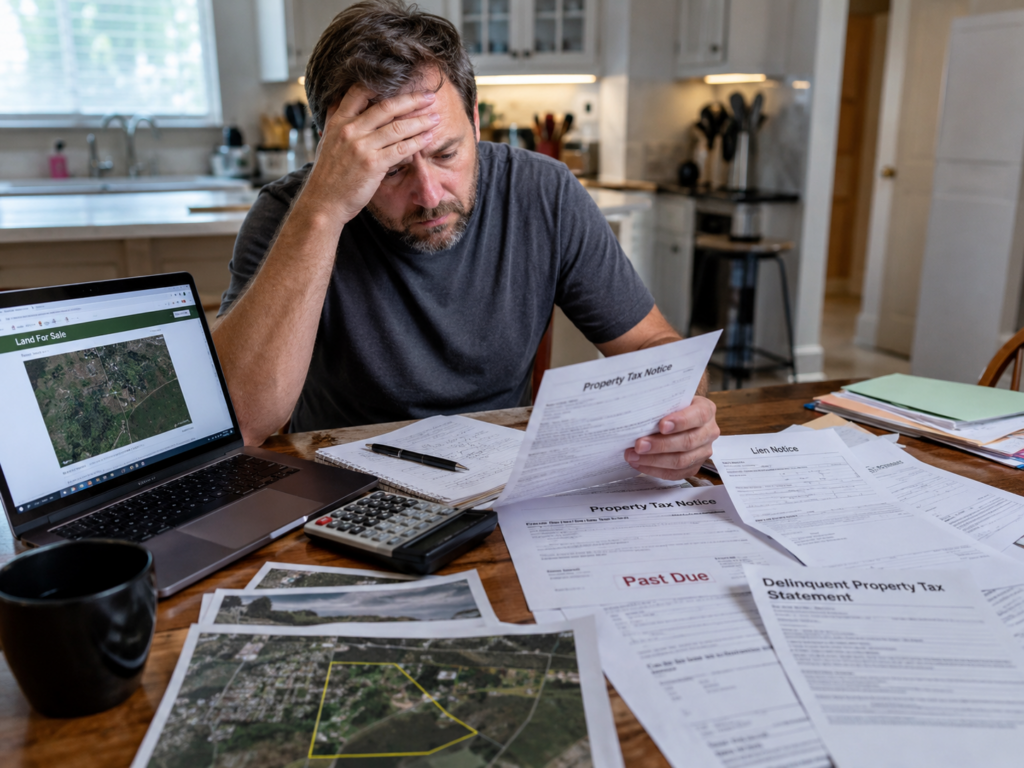
First, understand what’s actually on your property
Before you can sell, you need to know precisely what’s owed and to whom. There are two common scenarios that get lumped together but work differently:
Back property taxes. In Florida, unpaid property taxes don’t immediately mean you’ve lost your land. The county sells a “tax certificate” at auction (usually in May or June each year), which is essentially the unpaid bill being purchased by an investor who now earns interest on it. You still own the land. You can pay off the certificate at any time — but if you wait more than two years, the certificate holder can apply for a tax deed and the property goes to auction.
Recorded liens. A lien is a legal claim against your property by someone you owe money to — a contractor, a code-enforcement agency, the IRS, a homeowner’s association, or a creditor with a judgment. The lien has to be paid off (or negotiated down) before clear title can transfer.
Your county property appraiser’s website will show current tax status. Your county clerk of court has the official records search where you can look up liens. Pull both before you go any further. You can also call us at (239) 399-5800 — we’ll pull the records for you as part of the offer process.
Your three options when there’s a tax bill or lien attached
Option 1: Pay it off and sell traditionally
If you have the cash on hand and the land has equity, the cleanest path is to pay the back taxes (or settle the lien), then list with an agent or sell yourself. The downside: most landowners in this situation don’t have the cash on hand, which is why they fell behind in the first place. Agent listings for raw land in Florida also tend to sit on the market for 6 to 12 months even when they’re priced right.
Option 2: Sell to a cash buyer who handles the payoff at closing
This is the option most people don’t know about. A cash buyer (like FL Land Buyer) can structure the deal so the back taxes or lien payoff comes out of the sale proceeds at closing — meaning you don’t need to come up with the money yourself. The title company handles the disbursement directly to the county or the lien holder, and you walk away with whatever’s left after that’s paid.
The math looks like this: if your land is worth $30,000 and you owe $4,200 in back taxes plus a $1,800 code enforcement lien, the closing statement pays off the $6,000 directly and you net the remaining $24,000 (minus normal closing costs — and at FL Land Buyer we cover those too).
Option 3: Let it go to tax deed auction
This is the worst outcome. If you do nothing and the tax certificate holder applies for a tax deed, the property goes to public auction. The auction often clears for the amount owed plus minimum overage — meaning you may get back only a small fraction of what the land is worth, and sometimes nothing at all if the auction price exactly matches the debt. If you have any equity in the land, getting ahead of the auction by selling beforehand almost always nets you more.
What documents to have ready
If you’re going to sell quickly — to a cash buyer or otherwise — pulling these documents together up front speeds the process from weeks to days:
- Most recent tax bill (or screenshot from the county appraiser’s site)
- Copy of the deed showing how the land is currently titled
- Any lien notices, code enforcement letters, or HOA correspondence you’ve received
- Survey, if you have one (not required, but helpful)
- A list of every parcel ID involved if it’s multiple lots
Having these in one folder means the buyer’s title company can run the title search in 2 to 5 days instead of 2 to 3 weeks.
How long does this take?
Selling traditionally with an agent: 6 to 12 months on average for raw land in Florida, and you’ll usually need to bring the back taxes current before closing — or hope the buyer will accept a delayed-payoff structure (most won’t).
Selling to a cash buyer with the lien payoff handled at closing: typically 14 to 30 days from accepted offer to closed. With clean title (just back taxes, no other complications), 7 to 14 days is realistic.
A note on liens that exceed the land’s value
If what you owe is more than what the land is worth, you have fewer options. In some cases a cash buyer can still help by negotiating with the lien holder for a partial release — code-enforcement liens, in particular, are often negotiated down significantly if a sale is on the table. The IRS will also sometimes accept partial payment to release a lien. These deals are slower (30 to 60 days) but they happen.
If you’re underwater and just want the property off your name, talk to a real estate attorney about a deed in lieu or a quitclaim. Those have tax consequences you’ll want to walk through with someone qualified.
The bottom line
Back taxes and liens feel scary because the county language is intimidating, but they’re a normal part of land transactions in Florida. The land still has value, and there’s almost always a path to selling it. The biggest mistake we see is waiting — every month that goes by the interest compounds and the auction date gets closer. If you’re behind on taxes or have a lien on Florida land you want to sell, the first move is just figuring out exactly what you owe. From there, the options open up.
Ready to find out what your land is worth, even with back taxes or liens?
We buy vacant land across Florida and handle tax and lien payoffs directly at closing. No agent fees, no closing costs, and the offer is no-obligation. Get started below or call/text us at (239) 399-5800.