If you own hunting land in Florida — a camp your family bought decades ago, acreage that used to have an active lease, or a tract you inherited along with a stand, a food plot, and a few miles of dirt road — you’ve probably noticed something. Most of the advice online about selling land doesn’t quite fit your situation. It’s written for a subdivision lot or a random parcel someone bought as an investment, not for a property with a hunting culture built into it.
Hunting land is its own category. It gets valued differently, marketed differently, and bought by a different kind of buyer than a plain vacant lot. If you’re thinking about selling, it helps to understand what actually makes this kind of land worth something before you talk to anyone about a price.
What Makes Hunting Land Different From Other Vacant Land
A regular vacant lot is valued mostly on size, zoning, and location relative to development. Hunting land carries all of that, plus a second layer of value tied to what the land can support and what’s already been built into it.
That second layer includes things like:
- Game presence — deer, turkey, hogs, or waterfowl activity, and how consistent it is season to season
- Habitat quality — mixed timber, food sources, bedding areas, water access
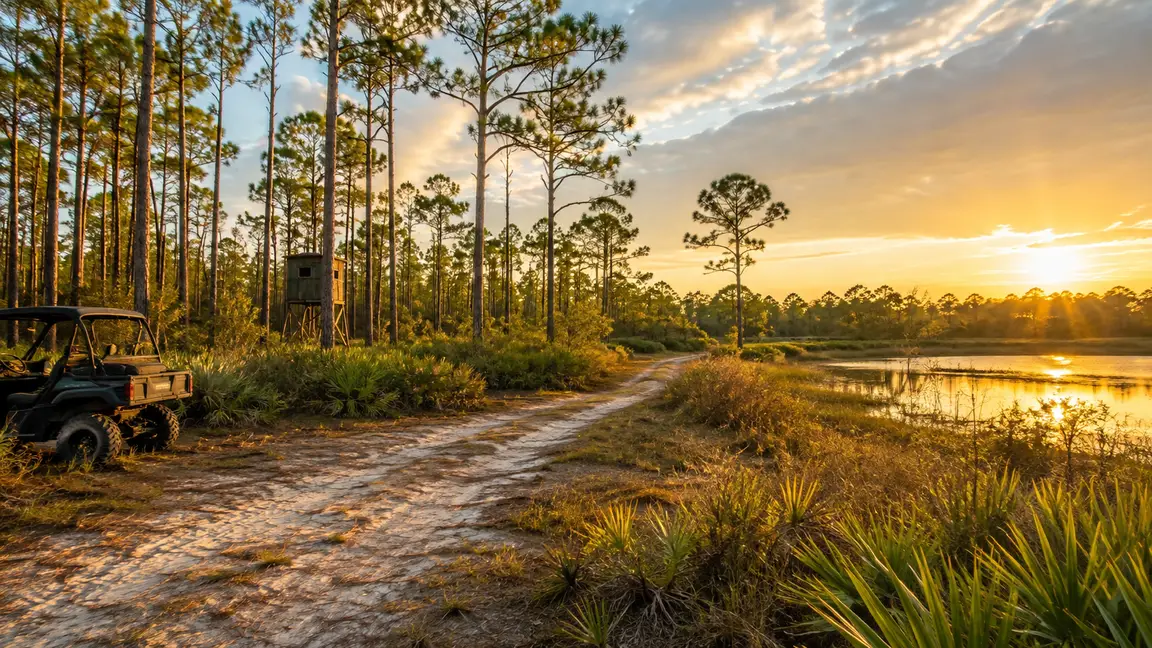
- Existing improvements — stands, blinds, feeders, food plots, cleared shooting lanes, interior roads or trails
- Access — a maintained road frontage or easement matters more here than on a typical lot, since hunters and equipment need to get in and out
- Proximity to public hunting land — tracts near a Wildlife Management Area or state forest often draw more interest, since hunters like having options nearby
None of this shows up on a tax record. It only shows up if someone actually walks the property or talks to someone who has.
What Actually Drives the Price
Two properties of identical acreage in the same county can be worth noticeably different amounts once you account for what’s on them. A 40-acre tract with a maintained road, a working food plot, and two established stands is a different offer than 40 acres of overgrown scrub with no interior access. Neither is “bad” land — they’re just different products to different buyers.
If your land currently has an active hunting lease, that income stream is also part of the value conversation. Florida hunting leases tend to run lower than in many other hunting states — commonly somewhere in the $5–$30 per acre, per year range depending on game quality, access, and improvements like food plots or stands, with well-managed tracts closer to population centers landing at the higher end. For a 40-acre parcel, that might mean roughly $500–$1,500 a year; a larger, well-improved tract could bring in several thousand. Even if you plan to sell rather than keep leasing, it’s worth having your lease terms and payment history handy, since it’s evidence of what the land can produce.
Agricultural or greenbelt classification can factor in too, if your hunting land is also enrolled for a reduced tax assessment. That classification affects the carrying costs a buyer will inherit, which can influence what they’re willing to offer.
Timber and Mineral Rights: Worth Checking Before You Sell
Larger hunting tracts, especially in Central and North Florida, sometimes carry value beyond the hunting itself. If the property has a meaningful stand of merchantable timber — pine plantation, natural hardwoods, or mixed timber — that’s a separate asset a buyer may factor into an offer, independent of what the land is worth for hunting. You don’t need a formal timber cruise before selling, but it helps to know roughly what’s growing out there.
Mineral rights are a less common but occasionally overlooked detail. Most Florida land sales convey mineral rights along with the surface, but on land that’s changed hands within a family for a generation or two, older deeds sometimes have mineral, oil, or gas rights severed or reserved somewhere in the chain of title. It rarely changes how the land is actually used, but it’s worth flagging early rather than discovering it during a title search.
Why the Buyer Pool Is Smaller — and Why That Changes Your Strategy
Here’s the part that catches a lot of sellers off guard: listing hunting land the way you’d list a house rarely works well. The buyer for a wooded, unimproved, or lease-income tract usually isn’t a family looking for a place to build. It’s a hunting club, a recreational land investor, a neighboring landowner looking to expand, or a direct buyer who understands rural Florida acreage.
That’s a much smaller and more specific pool than the general real estate market, which is part of why hunting and recreational tracts can sit for a long time when they’re marketed the same way as a standard residential lot. The people who actually want this kind of property aren’t necessarily searching the MLS. They’re searching hunting land forums, land-specific listing sites, or word of mouth through hunting clubs — or they’re working directly with a buyer who already knows the category.
Common Situations That Bring Hunting Land to Market
Most of the hunting land we hear about falls into a handful of situations:
- Inherited camps. A parent or grandparent bought land decades ago for hunting, and the family that inherited it doesn’t hunt, doesn’t live nearby, or can’t agree on what to do with it.
- Lapsed clubs. A hunting club that leased or co-owned the property dissolved, and the remaining owner is left holding land that no longer serves its original purpose.
- Relocation. The owner moved out of state and the logistics of maintaining a rural tract — mowing fire breaks, checking on stands, paying taxes — became more trouble than it’s worth.
- Wanting liquidity without waiting. The land is under an active lease that’s producing modest income, but the owner would rather have the cash now than manage a tenant relationship for years.
If any of these sound familiar, you’re not in an unusual spot. This comes up constantly with rural Florida acreage.
If You Have an Active Lease, What Happens When You Sell
An existing hunting lease doesn’t have to complicate a sale, but it does need to be handled directly. Depending on how the lease is written, it may transfer to a new owner, it may need to be terminated with notice to the lessee, or a buyer may want to negotiate a buyout so they take the property lease-free. None of these are dealbreakers — they’re just details worth sorting out early so there are no surprises for you or the lessee once a sale is in motion.
Getting a Fair Price
Before you get an offer on hunting land, it helps to have a clear picture of what you’re actually offering a buyer. Pull together anything you have on:
- Total acreage and any survey or boundary information
- Improvements — stands, feeders, food plots, interior roads, fencing
- Lease history and income, if applicable
- Agricultural or greenbelt classification status
- Access — is there deeded road frontage, or is it landlocked and dependent on an easement?
You don’t need to formally document all of this before reaching out. But knowing it off the top of your head means you’ll get a much more accurate first offer, rather than a generic per-acre number that doesn’t reflect what your land can actually do.
Selling hunting land in Florida doesn’t have to mean waiting on a small pool of niche buyers to stumble across a listing. If you’d rather skip the marketing process entirely and get a straightforward cash offer based on your land’s real characteristics, request your offer here and we’ll walk the details with you — no obligation, no pressure to accept.