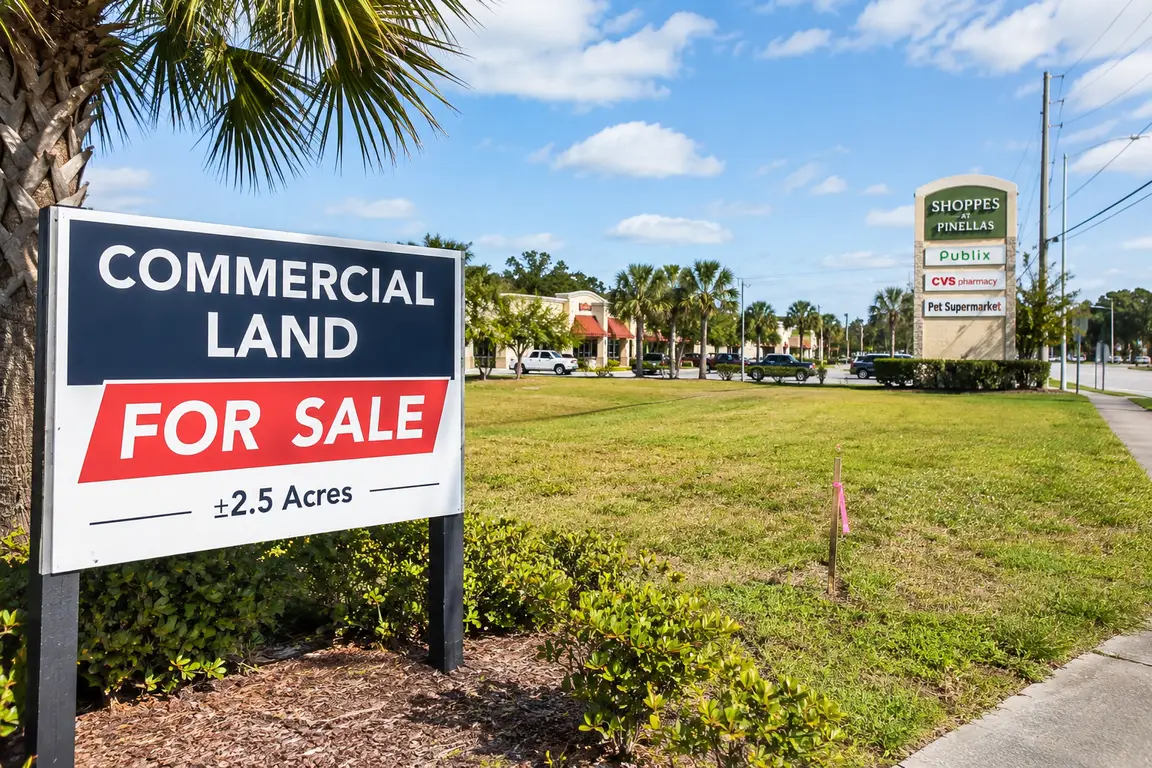
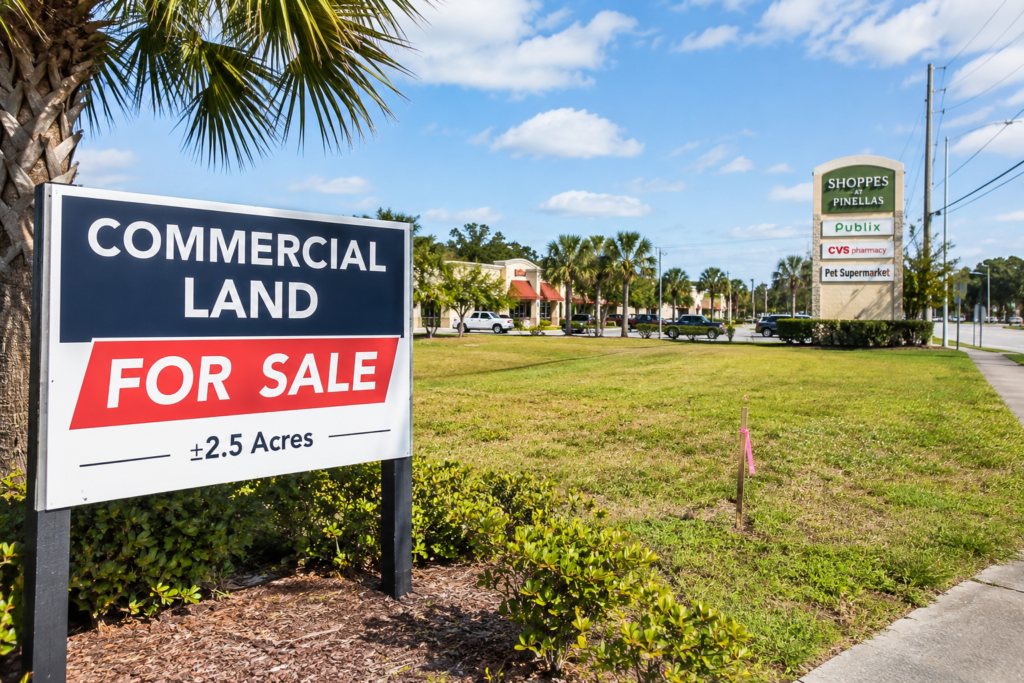
Commercial land in Florida can be worth a lot more than a residential lot of the same size. It can also take a lot longer to sell. Commercial buyers are usually developers, businesses, or investors, and they study a parcel closely before they commit. They look at zoning, traffic, utilities, environmental history, and what local government will actually let them build.
If you own a commercially zoned parcel you no longer want- maybe one you inherited, a lot your business never built on, or land along a road that changed around you- this guide explains what drives value, what slows deals down, and how to choose the right way to sell.
Start With Zoning and the Future Land Use Map
The first thing any commercial buyer checks is what the land is allowed to become. In Florida, that comes down to two documents:
- The zoning district, which sets the uses allowed today (retail, office, light industrial, and so on), along with setbacks, height limits, and parking rules.
- The future land use designation in the county or city comprehensive plan, which shows what the local government plans for the area long term.
When those two line up and support the buyer’s plans, the land is much easier to sell. When they don’t, the buyer may need a rezoning or a comprehensive plan amendment, which can take months and doesn’t always succeed.
You can usually look up both on your county property appraiser’s website and the county or city planning department’s GIS map. A quick call to the planning office to confirm your parcel’s zoning and any pending changes is worth the time before you set a price.
How the Live Local Act Changed Commercial Land
Florida’s Live Local Act, first passed in 2023 and amended in 2024 and 2025, made many commercial parcels more valuable to one group of buyers: apartment developers.
Under the law, local governments must allow multifamily or mixed-use residential projects on land zoned for commercial, industrial or mixed use, as long as at least 40 percent of the units stay affordable for at least 30 years. Qualifying projects can also use the highest density and height allowed nearby, within limits, and get administrative approval instead of a drawn-out public hearing. The 2025 changes clarified which parcels count as “commercial,” extended the law to parts of some planned unit developments, and limited how much nonresidential space a city can require in a mixed-use project.
For sellers, this means a commercial lot that once looked like a small retail pad might now interest a housing developer. That’s worth knowing before you accept a price based only on its value as a retail site. Rules change from session to session, though, so have a land use attorney or planner confirm how the law applies to your parcel today.
What Commercial Buyers Look At
Beyond zoning, most commercial buyers weigh the same handful of factors:
- Location and traffic. Road frontage, traffic counts, visibility, and access points (curb cuts, turn lanes) matter a great deal for retail and service businesses.
- Utilities. Central water and sewer nearby makes a parcel much easier to develop. If the site needs a well and septic, or long utility extensions, expect a lower price.
- Size and shape. Odd shapes, narrow frontage or wetlands that shrink the usable area all lower value.
- Flood zone and drainage. Stormwater requirements can use up a big part of a Florida site. Flood zone status also affects building costs and insurance.
- Impact fees and road requirements. New development often owes impact fees, and some sites need road improvements. Buyers price these into their offers.
Environmental Reports and Why Deals Stall
Most commercial buyers, and nearly every lender, will order a Phase I Environmental Site Assessment before closing. This report reviews the property’s history for signs of contamination, such as an old gas station, a dry cleaner, a farm chemical storage area, or buried debris.
If the Phase I turns up a concern, the buyer may ask for a Phase II with soil or groundwater testing, which adds weeks and cost. Buyers may also order wetland delineations, protected species surveys (gopher tortoises are a common one in Florida), and a boundary survey.
You don’t have to commission these reports yourself, but it helps to gather what you know up front: past uses of the land, any old permits, surveys, and environmental reports from earlier sales. Being upfront early keeps a deal from falling apart late.
Contingencies and Timelines
Commercial land contracts rarely close in 30 days. A typical developer contract includes:
- A due diligence period, often 30 to 90 days, when the buyer can walk away for nearly any reason.
- Entitlement contingencies, which let the buyer wait for site plan approval, rezoning, or permits before closing. These can add six months or more.
- Financing contingencies, if the buyer is borrowing.
The price on a contract like this can be attractive, but your land can be tied up for a long time and still not close. Before signing, ask how long each contingency lasts, whether the buyer’s deposit becomes non-refundable at any point, and whether you can charge for extensions.
Costs and Taxes to Plan For
A few costs show up in most Florida commercial land sales:
- Documentary stamp tax on the deed, generally $0.70 per $100 of the sale price. Miami-Dade uses a different rate for properties other than single-family homes, plus a surtax. In Florida, the seller customarily pays this, though it can be negotiated.
- Title insurance and closing fees, which vary by county and by who pays according to local custom.
- Broker commissions, if you list. Commissions on commercial land are negotiated and can be higher than on homes because the land takes longer to market.
- Capital gains tax. If the land is investment or business property, you may be able to defer the gain with a 1031 exchange, which requires naming replacement property within 45 days and closing within 180 days. Talk to a CPA before you sign a contract, not after.
Your Options for Selling
Most owners of Florida commercial land choose among three paths. Our guide to your options for selling land goes into more detail, but here is the short version:
- List with a commercial broker. This is the best fit for prime, entitled parcels in active markets. It gives you the widest exposure, but expect commissions and a long timeline.
- Sell directly to a developer. This can bring the highest price if your parcel fits their plans, but it usually comes with long entitlement contingencies.
- Sell for cash to a land buyer. This is the fastest and simplest route. There are no commissions, few or no contingencies, and a set closing date. It often makes the most sense for smaller commercial lots, parcels with complications (access, wetlands, back taxes, title issues), or owners who want certainty more than top dollar.
There’s no single right answer. A busy corner lot in a growing county may be worth a long developer contract. A small commercial lot in a rural area that has sat on the market for two years is often better sold quickly for cash.
Questions to Ask Before You Accept an Offer
Whoever the buyer is, get clear answers to these questions:
- How long is the due diligence period, and when does the deposit become non-refundable?
- Does the offer depend on rezoning, permits, or financing?
- Who pays for title insurance, doc stamps, and closing costs?
- Which title company or closing attorney will handle the closing?
- What happens if the buyer asks for extensions?
You can learn more about how our process works, and our FAQ answers common questions about timelines, closing costs, and how cash offers are structured.
Ready to Sell Your Florida Commercial Land?
If you own commercial land in Florida that you’d rather turn into cash than keep paying taxes on, we can help. FL Land Buyer buys land directly. There are no commissions and no listing fees, and you won’t spend months waiting on a developer’s permits. We’ll look at your parcel, explain how we arrived at our number and let you pick the closing date.
Request a no-obligation cash offer and see what your land could sell for this month.