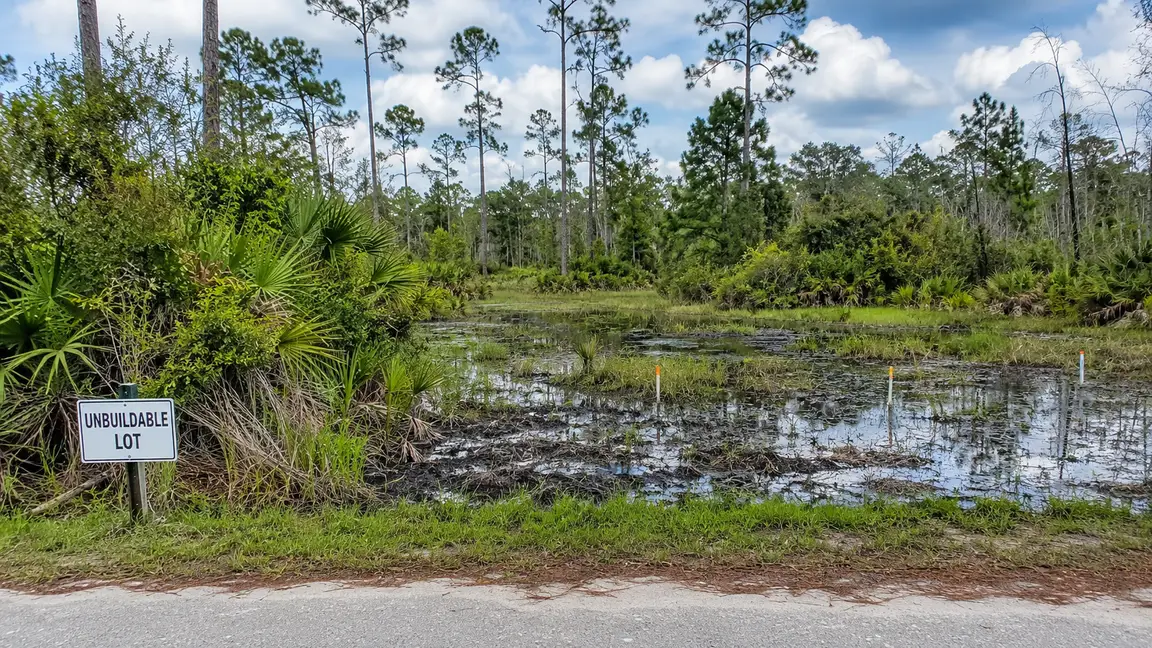
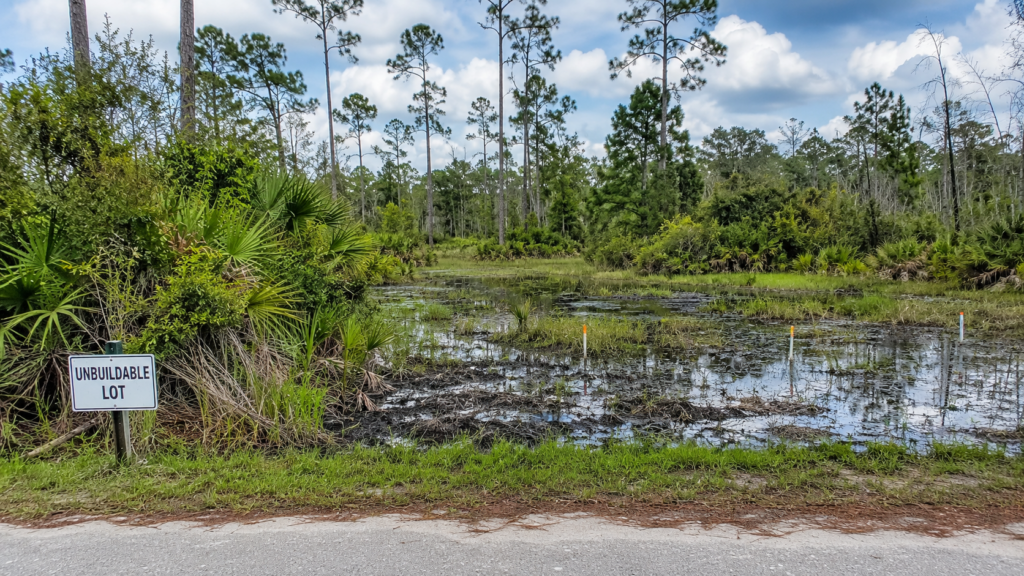
You bought the lot years ago, thinking you’d eventually build on it. Or you inherited it from a parent who held it for the same reason. Then you called the county, ordered a wetlands determination, or had a perc test done — and the answer came back somewhere between “you can’t build here” and “you can, but it’ll cost six figures in fill, permits, and environmental work before you put a single nail in.”
That’s the moment a piece of Florida land goes from “asset I’ll deal with later” to “I just want this off my plate.” If that’s where you are, this post is for you. Selling an unbuildable lot in Florida isn’t the same as selling a normal vacant parcel — but it’s absolutely doable, and people do it every week.
Here’s what’s actually going on, what your options look like in 2026, and how to get the parcel sold without sinking more money into it.
What “unbuildable” actually means in Florida
“Unbuildable” isn’t one thing. In Florida, a lot usually earns that label for one (or a combination) of four reasons:
Wetlands and environmental restrictions. Florida has more wetlands than almost any other state, and they’re regulated by a stack of agencies — the Army Corps of Engineers, the Florida Department of Environmental Protection, and one of the regional Water Management Districts, depending on where you are (SWFWMD, SFWMD, SJRWMD, NWFWMD, or Suwannee River). If a meaningful portion of your parcel is a jurisdictional wetland, you can’t just fill it and build. You’d need permits, mitigation credits, and a wetland delineation that holds up — and many lots come back with so much wetland coverage that there’s no economical path to building.
Setbacks, floodplain, and zoning. Some lots have enough buildable area on paper, but get killed by the rules around it. A 50-foot front setback, 25-foot side setbacks, a wetland buffer, and a flood elevation requirement can leave you with a building envelope the size of a parking space. Counties along the Gulf and Atlantic coasts also have FEMA flood zone requirements that drive up the cost of any structure significantly.
No septic or well approval. If your lot doesn’t have access to municipal water and sewer (most rural Florida lots don’t), you need a passing soil percolation test for septic and a viable well location. A failed perc test — too much clay, too shallow a water table, or too small a parcel for the required drain field — can effectively shut down residential use.
No legal access. A lot of older Florida parcels were platted decades ago and never got a real road. If your parcel is landlocked, or if the only access is across someone else’s property without a recorded easement, traditional buyers and lenders will walk. Banks won’t lend on it. End buyers can’t insure it.
You might have one of these issues. You might have all four. Either way, the path to selling is similar.
Why traditional buyers and agents struggle with unbuildable lots
Most real estate agents are wired to sell properties that work for a retail buyer with a mortgage. Unbuildable lots don’t fit that mold. The buyer pool shrinks dramatically — no first-time homebuyers, no builders, no second-home buyers — and what’s left is a small niche of cash buyers, neighbors who want to expand their parcel, conservation buyers, and land investors.
A lot of agents will take the listing, put it up at an optimistic price, and let it sit. After six or nine months of no movement, you cut the price. After another six months, you cut it again. Meanwhile the property taxes keep coming, and you’re still owning the problem.
This isn’t an agent’s fault — it’s just that the traditional MLS model isn’t built for distressed land. To sell an unbuildable lot, you need to either find the right buyer directly or accept that the price will reflect the difficulty.
What to gather before you list it or call a buyer
Whether you go FSBO, list with an agent, or call a direct buyer like us, having the right paperwork ready will get you to a closed sale weeks faster.
- The deed and a recent tax bill — confirms ownership and shows the property’s assessed value, parcel ID, and any homestead status.
- Any wetland delineation, perc test, or survey you’ve already had done. If you don’t have these, don’t go pay for them yet — most cash buyers will do their own due diligence.
- The county property appraiser’s parcel printout — usually free online, shows zoning, future land use, FEMA flood zone, and acreage.
- Notes on access — is there a recorded easement? Is the road platted but unbuilt? Does a neighbor cross your land?
- Any code enforcement letters or HOA assessments if applicable — better to disclose up front than have it blow up the closing.
Florida law requires you to disclose known material defects, including environmental issues like wetlands. Being upfront also speeds up the close.
A realistic 2026 pricing conversation
Here’s the part most landowners struggle with: an unbuildable lot is worth a fraction of what a comparable buildable lot is worth — sometimes 10 to 30 cents on the dollar, depending on how unbuildable it really is and what the surrounding parcels look like.
That feels insulting if you’ve been paying taxes on it for 15 years and the county appraiser values it at $40,000. But the county’s value isn’t the market value. The county is valuing it based on size and zoning. The market is valuing it based on what someone can actually do with it. If no one can build, recreational use (hunting, fishing access, conservation buffer, or a neighbor expanding their lot) is what’s left — and those uses pay less.
The good news: in 2026, the Florida land market has settled into a more rational rhythm. Inventory across the state is sitting around 5 to 7 months of supply, and serious cash buyers are still active in every county. Distressed and unbuildable lots in particular have a steady-if-quiet buyer pool of investors and conservation groups who specifically look for them.
Your three real options
Option 1: List it FSBO or with an agent and wait. This works if you have time, the lot has any redeeming feature (waterfront, a neighbor with deep pockets, a partial buildable area), and you’re willing to negotiate aggressively. Plan on 6 to 18 months and several price cuts.
Option 2: Donate it to a land trust or conservation group. If the lot has ecological value (wetlands, habitat for protected species, or it sits in a wildlife corridor), groups like the Conservation Fund or a regional land trust may accept a donation and you may be able to claim a charitable deduction. Talk to a CPA before going this route — the tax benefit depends on a qualified appraisal and your individual situation.
Option 3: Sell directly to a cash buyer who specializes in difficult lots. This is what we do at FL Land Buyer. We buy unbuildable lots, wetland-heavy parcels, landlocked acreage, and lots with failed perc tests — as-is, with no commissions, no closing costs to you, and on your timeline. The price will reflect what the lot actually is, but you walk away with cash in days instead of waiting years.
What the direct-sale process looks like
We try to keep it simple. You send us the address or parcel ID, we pull the county data and any environmental layers ourselves, and we come back with a written cash offer within a few business days. If the number works for you, a Florida title company handles the closing, we pay all standard closing costs, and you get paid by wire or check at closing. From your first call to money in hand is usually two to four weeks — sometimes faster if there’s no probate or title cleanup to do.
You don’t have to clean up the lot. You don’t have to fix the access issue. You don’t have to do another survey. We take it the way it is.
Ready to find out what your unbuildable Florida lot is worth?
If you’ve got a parcel that won’t perc, is mostly wetlands, has no road, or just isn’t worth what the county thinks it is, we’d be glad to take a look and make you a straightforward cash offer. No pressure, no commission, no need to fix or clean anything up first.
Request your no-obligation cash offer here — or give us a call at (239) 399-5800 and we’ll talk through your specific lot.