Updated November 2026
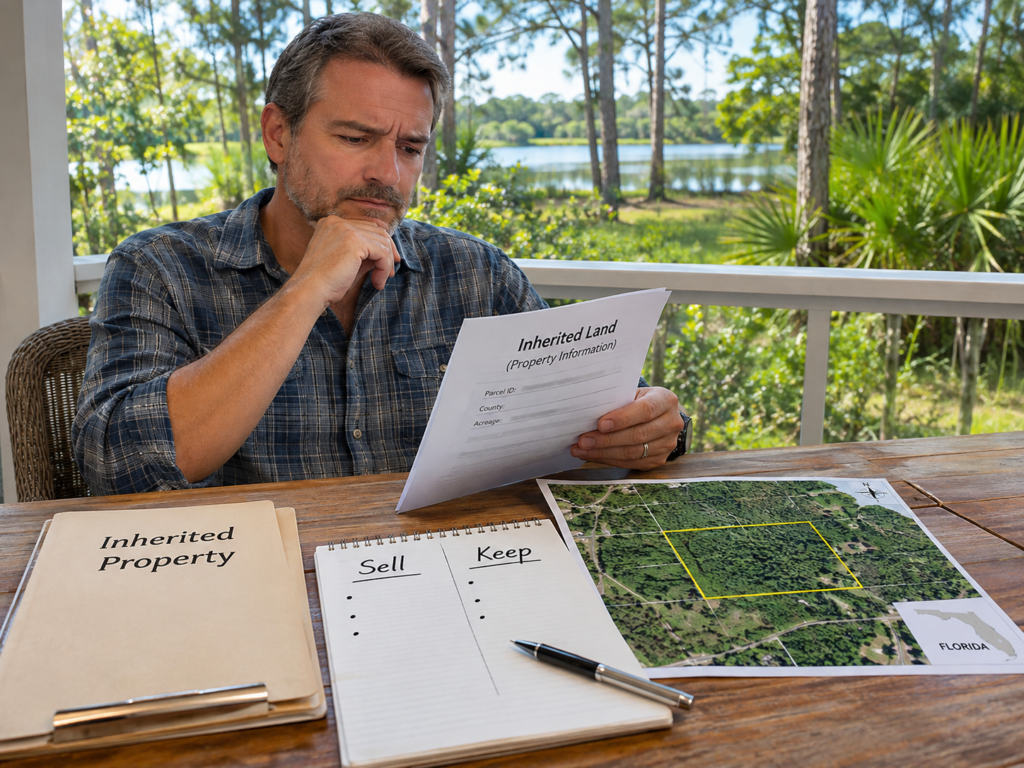
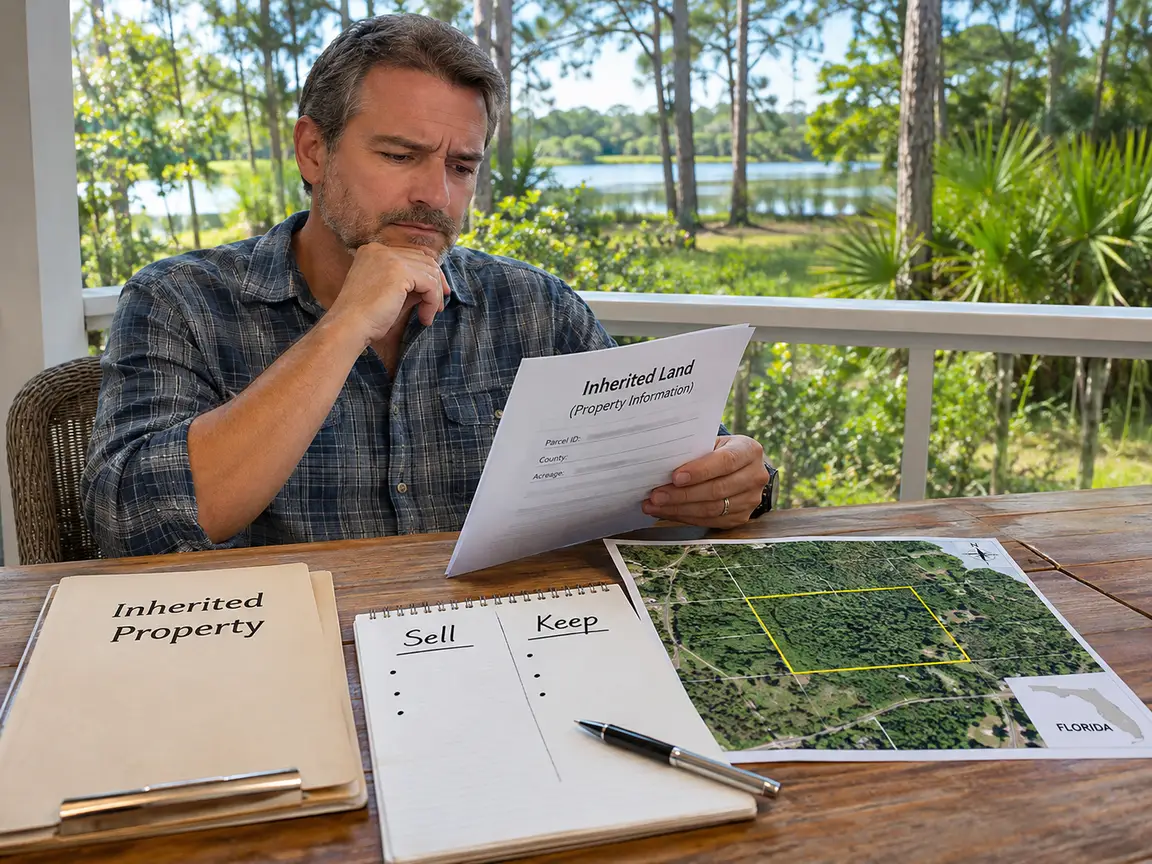
Are you grappling with the decision of whether to sell or retain your inherited property in Florida? Spending money on a house that wasn’t originally yours can be a source of frustration. Below, we walk through the real costs of keeping inherited land or property in Florida and the main ways to sell, so you can decide what makes sense for you.
Whether you were aware of the inheritance or not, unexpected challenges may arise once the property is under your ownership. Owning inherited property comes with ongoing expenses, including annual property taxes, insurance, maintenance, and unforeseen repairs. Vacant land adds its own costs, such as mowing and clearing to stay out of code enforcement, and the occasional lien or fine if it is neglected. As seasoned investors advise, the longer you hold onto it, the more it can cost you. Before deciding on whether to sell or retain the inherited property, take a moment to consider a few crucial questions. Invest time in understanding the market and the specific property to inform your decision-making process. In the following discussion, we’ll provide tips to help you assess whether to keep or sell your inherited property in Florida, along with insights into the most effective selling approaches.
Ask Yourself These Questions
Do you have any use for the property?
Keeping the property for sentimental reasons is acceptable if it aligns with your desires, but you shouldn’t feel compelled to keep the house. Only retain ownership if you have a genuine purpose for it. There’s no rationale in holding onto a property that will merely remain unused or cost you a lot of money.
Are there any other owners?
In cases where there are multiple property owners, all parties need to gather and reach a collective decision. Collaborate to determine whether to retain or sell the land. If there’s an individual with a dissenting opinion, consider the option of buying them out to prevent escalating disagreements. Keep in mind that it’s just a house, and the person who passed it down to you would undoubtedly prefer their gift to be a source of unity rather than contention.
What will keeping it actually cost? Florida does not have a state inheritance tax or estate tax, so you generally will not owe the state anything simply for inheriting. For federal capital gains purposes, inherited property usually receives a stepped-up tax basis (generally its value at the date of death), which often means little or no taxable gain if you sell soon after inheriting. Property taxes are the higher ongoing cost: they come due every year whether or not the land is used, and non-homestead property is reassessed when ownership changes. Florida voters are also deciding a property tax amendment on the November 3, 2026 ballot, so ask your county property appraiser how any changes could affect your parcel. This is general information, not tax or legal advice, so confirm details with a CPA or attorney.
If you decide you want to sell, how much are you willing to spend upfront?
If the property has a house on it, the first step is usually clearing it out. If it is vacant land, the first step is confirming who legally owns it, since probate may need to be finished before a sale can close. Opting for a conventional property listing entails certain initial expenses. You’ll probably need to address repairs and enlist professional cleaning services for the house. Making repairs to a house you’re not familiar with can be challenging, as you might not fully understand the extent of the work required. It’s essential to avoid finding yourself in a situation where you’re investing significant amounts in a property you ultimately intend to sell. Depending on your chosen selling method, you may encounter not only repair costs but also expenses associated with marketing.
Ways To Sell
List It With An Agent
Preparing your inherited property in Florida for listing involves getting it ready for the MLS. Examine the selling prices and conditions of comparable properties and assess how your property compares. It’s crucial to set realistic prices and avoid over-improving. Listing inherited land may induce frustration, especially when faced with the unexpected expense of selling a property that wasn’t originally yours. You may also find your property taking months to sell if it was overpriced or not repaired well.
Sell On Your Own
Selling on your own as a for-sale-by-owner (FSBO) listing will save you the listing commission, but you will still pay for cleanup, marketing, and other selling costs. In most cases, selling on your own to a regular buyer will take longer and ultimately put less in your pocket. You may also be required to pay an agent for providing you with a buyer (often referred to as a buyer’s agent commission), which could be up to 3% of the purchase price.
Sell To An Investor
Selling your inherited property to FL Land Buyer means no out-of-pocket expenses. We buy land and properties as-is, so there is no cleanup, no staging, and no repairs to pay for first. Additionally, you won’t be burdened by hefty commissions, agent fees, or administrative costs. Opting for a direct sale ensures a swift receipt of your profits, allowing you to move on from the land without enduring months of repairs and waiting for the property to sell on the market for potentially more money. Not sure which route fits? Compare all of your options to sell land side by side. Curious how it works? See our step-by-step process to sell land or read the FAQ. Ready to move on? Request your no-obligation cash offer.