updated June 26, 2026
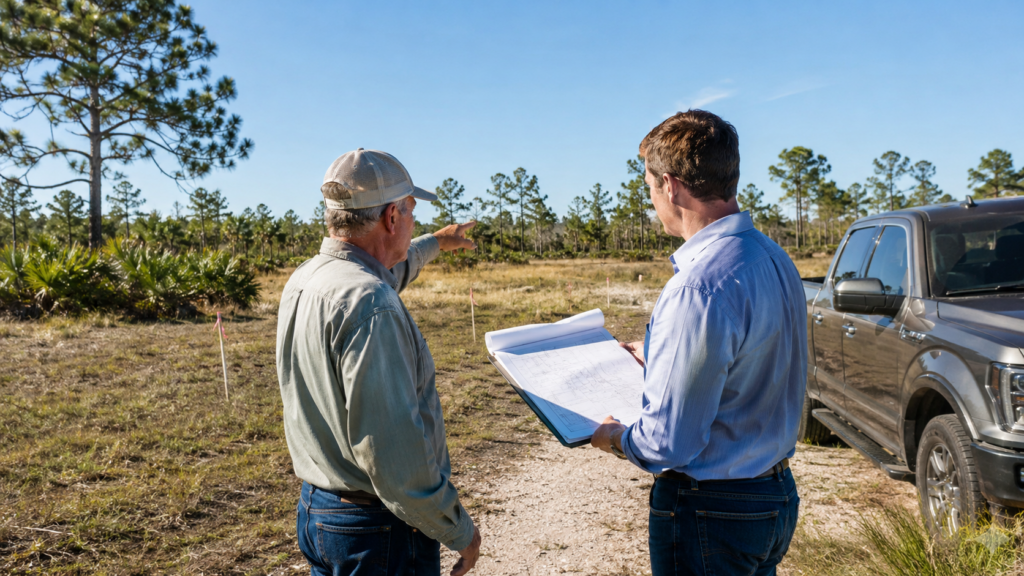
Selling Florida land to a developer can be a strong outcome — when the parcel actually fits what builders are buying right now. The Florida new-construction market shifted hard in 2024, stabilized through 2025, and in 2026 builders are being a lot pickier about where and what they acquire. This guide walks through how the process really works in 2026, where developers are still actively buying in Florida, what to expect on price, and — just as important — how to tell early if a developer is the wrong buyer for your parcel so you don’t waste six months chasing the wrong path.
Understanding the Market
Before you reach out to a single developer, get clear on where Florida builders are actually acquiring in 2026. The Tampa metro pulled roughly 31% of all new residential permits in the state in early 2026, and suburban-exurban counties — Pasco, Polk, Manatee, St. Lucie — are still absorbing growth at scale because they have the land and the relative affordability. Sarasota new construction is mostly east of I-75. Southwest Florida (Lee, Collier) is softer because of insurance and standing inventory, so builders there are far more selective than they were two years ago. If your parcel sits in or next to one of the active builder corridors, you have real developer interest. If it’s an interior rural parcel three counties from the nearest growth path, a national or regional builder almost certainly isn’t your buyer — and that’s important to know before you spend money on surveys and entitlement studies aimed at attracting one.
Preparing Your Land for Sale
Presentation matters more for developers than for almost any other type of land buyer, because the developer is underwriting a multi-year project off your parcel. The basics: clear debris and brush so the parcel can actually be walked, confirm legal access (developers will not buy a landlocked parcel without an easement already in place), and resolve any open code-enforcement or zoning issues with the county. A recent boundary survey, a Phase I environmental site assessment, and a wetlands delineation will all speed the process and often raise the offer — but they cost real money up front (a Phase I in Florida typically runs $2,500 to $4,500 in 2026; a wetlands delineation can run several thousand more depending on acreage), so only commission them if you’ve already had concrete interest from a developer.
Valuation and Pricing
Pricing land for a developer is different from pricing it for a retail buyer or a cash investor. Developers underwrite to a residual value — they back into what they can pay for raw land by starting from projected home prices, subtracting hard and soft construction costs, financing costs, and their required margin. Because home prices in Florida have flattened and builder margins compressed in 2025–2026, the residual land value a developer can justify is lower than it was in 2021–2022. Practically, that means appraisals based on 2022 comps will overstate what a developer will actually pay today. If you want a defensible number, hire an appraiser with current development experience in your county, and ask them specifically for a residual-land-value approach rather than just sales comparison.
Marketing Your Land
If your parcel is realistic developer inventory, the marketing approach is targeted, not broad. See all your options to sell Florida land — including paths that don’t involve a developer. Social media and Zillow won’t reach acquisition managers at national builders. The two paths that actually work in 2026: (1) a land broker who specializes in development tracts and already has the acquisition contacts at D.R. Horton, Lennar, Pulte, KB Home, and the active regional builders in your county; or (2) a direct outreach by you or your attorney to the land acquisition departments of those builders, with a one-page summary of the parcel (acreage, zoning, utilities, access, asking price). Either way, expect a 6–18 month timeline from first contact to closing if the developer is interested — these are not fast transactions.
Understanding the Developer’s Perspective
To negotiate effectively, it’s important to understand the developer’s perspective. Developers assess land based on its suitability for their project, potential profitability, and the risks involved. Being open to discussions about the terms of sale, including price, payment plans, or contingencies, can facilitate a smoother transaction.
The Legal and Regulatory Landscape
Navigating the legal and regulatory aspects of land sales is paramount. This includes understanding zoning laws, land use regulations, and any potential for rezoning that could increase the land’s value. Consulting with a real estate attorney who specializes in land transactions can guide you through this complex process, ensuring that all legal requirements are met and protecting your interests.
Closing the Deal
Once you’ve attracted a developer and agreed on the terms, the final step is closing the deal. This involves finalizing the sales agreement, ensuring all necessary documents are in order, and managing the closing process. A real estate attorney can be invaluable in this phase, helping to negotiate the final terms and ensuring a smooth transfer of ownership.
Conclusion
Selling Florida land to a developer can absolutely be the right outcome — when the parcel fits a builder’s acquisition criteria, and you can wait out a 6–18 month process. If that’s your situation, get the right broker, get honest about residual value, and don’t spend big money on surveys and environmental work until you have real interest. If your parcel isn’t a fit for a developer — wrong location, wrong size, wrong zoning, or you simply don’t want to wait — that’s not a failure. It just means a different buyer is the right buyer. A direct land-buying company can close in a few weeks instead of a few quarters, pay cash, and take the parcel as-is. Here’s exactly how our cash purchase process works, step by step. That’s exactly what we do at FL Land Buyer, and for a lot of Florida landowners, it ends up being the cleaner path. Get a no-obligation cash offer on your parcel here.
Key Takeaways
- Market Insight: Research and understand the development trends in your area.
- Preparation: Enhance your land’s appeal through cleanup, access improvements, and resolving legal issues.
- Valuation: Accurately price your land with a professional appraisal.
- Marketing: Utilize various platforms and networks to reach potential developers.
- Negotiation: Be open and flexible, understanding the developer’s needs.
- Legal Guidance: Consult with professionals to navigate the complexities of land sales.
Selling land to a developer in Florida offers a promising opportunity for landowners. With the right preparation, marketing, and professional advice, you can navigate the sales process effectively and maximize your land’s value.